What I Read This Month: May
forgotten time, discourse allergies, Newt Scamander????, memories of beer


14. Tessa Miyata Is No Hero, Julie Abe (2023)
15. Misfit Mansion, Kay Davault (2023)
16. Oddity Woods, Kay Davault (2025)
Lately I catch myself inaccurately referring to the two young people living in my home as “small children”—a term left over from years past, typically deployed in the context of explaining to myself or others why I’m so tired, why I’m so distracted, why I’m not writing. It’s the small children, you see; it’s the parenting of the small children! What was once a probably feeble excuse is now outright misinformation—our kids are nine and six, their next birthdays rapidly approach, they are by no means small, they are just children. But it’s hard to break the habit after so many years of attending to their every mosquito bite, their every bad dream, their ever dinner plate; eventually their smallness just gets baked in, hard not to see even when I can’t see it.
It scares me, though, how much I already forget. Both kids can read now, and while our son still likes and wants to be read to, our daughter dismissed us from the process years ago. I remember the day she asked me to stop, but I wish I could recall better the hours and hours in which I read to her. In which we sat in a rocking chair, or the pile of stuffies under her lofted bed, reading Madeline; I Like Myself!; Little Fur Family; Time for Bed, Miyuki; the copy of Peepo! Kevin brought home from a work trip to London when she was not yet two. Later—Charlie and the Chocolate Factory, Piper Green and the Fairy Tree, Zoey and Sassafrass, Ivy and Bean, Junie B. Jones in the basement during a tornado warning. I know it all happened but I can’t quite feel it: the weight of her in my lap, her tiny voice chiming in with questions, the vibrations of her laughter. Why do I always feel like time forgotten is time that might as well have never happened? I try not to dwell, I try to keep in mind there are years yet to savor, nine and six aren’t that big; it’s all still happening and it will be for a while. I think, too, of the first few months of her life, when I was sleepless, terrified, posting cries for help online, and the great Meaghan O’Connell gave me this benediction: it’s okay if you’re not a baby mom. It’s okay if you’re a kid mom instead. A formulation that saved my life a little! I loved my babies, but the things I’m nurturing now are the things I was built to nurture: niche interests, sartorial confidence, emotional intelligence, artistic expression, moral compasses, pop culture obsessions, inside jokes, metaphysical hypotheses, grilled cheese sandwich construction. Inevitably, the specifics of their smallness must grow fuzzy. There’s not much to do but accept it. Accept that you have the children of your dreams, after so much sorrow and pining, and that every day you all work towards the shared goal of sending them out into the world, even though “out into the world” is a place far away from you.
May can be rough; in May I come a little unglued. Mother’s Day, grief for baby gone, grief for babies growing. Maybe I needed a balm, or maybe I was trying to get back, however imperfectly, to the metaphorical rocking chair, but this month I asked my daughter to recommend some of her favorite books, and then I read the pile she curated for me. Her taste, I can smugly declare, is excellent; her selections feature graphic novels, mysteries, social justice, supernatural creatures, found families, Japanese folklore, Egyptology, fairy tales, girls doing stuff. These books gave me occasional, fleeting, magical, vicarious twinges of the way reading made me feel when I was a kid: fully immersed in the world of the story, while at the same time closer to solving some tiny part of the puzzle that was the real world.
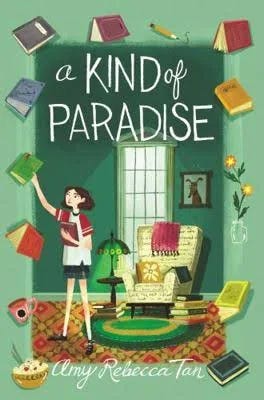
18. A Kind of Paradise, Amy Rebecca Tan (2019)
This month the children’s book writer Mac Barnett got into trouble on the internet for declaring that “94.7 percent of kids’ books are crud.” I’m not going to break down that discourse because I have a discourse allergy; if I approach discourse too directly, my eyes roll so hard they break off and go rattling around loose in my skull. I get why people are mad; I think it’s for the same reason I used to get ornery every time Slate published a thinkpiece about how it was embarrassing for adults to read YA (I got ornery because I was too online and thought everything was About Me). Now I’m older, wiser, less online, and I know Slate was right and so is Mac Barnett. I’ve read so many children’s books over the last decade written by people who seemingly have never met a child. Humorless, narratively confounding, thuddingly moralistic books. Books written expressly to curry the favor of the parents, or books with such an intrusive authorial presence it can feel like the writer is tapping on the chalkboard with a ruler so no kid could possibly miss their point.
Tan’s novel elegantly elides these issues. A Kind of Paradise is about Jamie, a middle schooler who must spend her summer volunteering at her local library as punishment for cheating at school. Her embarrassment, guilt, and misery over her predicament evolve slowly and believably into a sense of belonging amongst the staff and patrons, just as budget cuts threaten the library’s status in her small town. The book is about real things: forging a community, building confidence, wanting to be a part of something bigger than yourself, wanting to be a better person. But Tan’s writing is so good, the book’s atmosphere so cozy and inviting, her characters so credibly kind, that it feels like a young reader could absorb her often profound message without realizing that they were learning anything at all. I tore through it over the course of a couple of rainy hours, neglecting work and chores, crying repeatedly. I can’t wait to read the companion novel, which my daughter is currently devouring and attests is “sooooo good.”
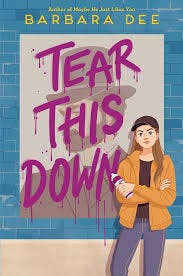
19. Tear This Down, Barbara Dee (2025)
Explicitly feminist text about dismantling the patriarchy. Features many solid tips for forming coalitions and protesting authority. You have my permission to see Daughter’s selection of this novel as a monument to my parenting.
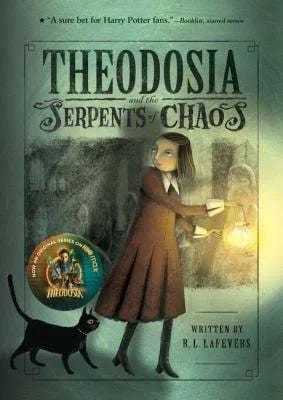
21. Theodosia and the Serpents of Chaos, R.L. LaFevers (2007)
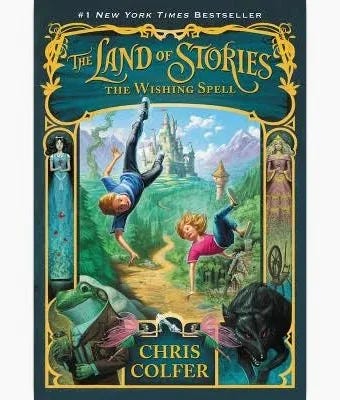
23. The Land of Stories: The Wishing Spell, Chris Colfer (2013)
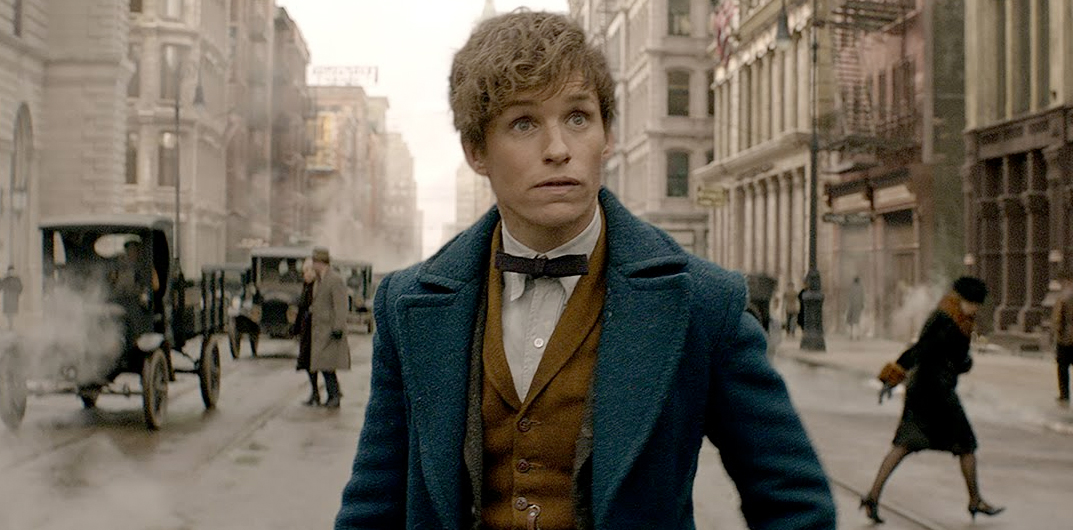
When did you first begin to realize there was something deeply wrong with J.K. Rowling? For me, it was a day or two after the 2016 election. The mood on my timelines was dystopic. The fear was palpable. The people were bereft. I messaged with a young adult who’d read the Vivian Apple books, who was living in Trump country with true believer parents, feeling worried and sad and hopeless. I felt personally responsible for this young adult’s welfare. Meanwhile, Joanne was breathlessly tweeting promo for the upcoming Fantastic Beasts and Where to Find Them movie. Surely, I thought, Joanne, though British, was receiving these kinds of messages, too? Did she have nothing smart or sympathetic or interesting to share? Had she not written a book series that was, at least, you know, kind of, about young people fighting fascism? Why would she be talking about Newt Scamander at a time like this????
These last two books have traces of boy wizard DNA in them—maybe not intentionally; maybe it’s just that one can sort of feel the hopes and dreams of the respective publicity departments pressing down on the prose. Neither transported me as the boy wizard once did, but I was happy to know they transported my daughter, and I can’t help but feel goodwill towards them, considering their authors have not revealed themselves to be corrupt of soul and vile of heart. What is one to do about the boy wizard? His DNA is in my reading and my writing whether I like it or not, and I don’t. He feels like a friend I had when I was a kid, whose mom went nuts and joined a cult and pulled him out of school and I never saw him again. I wish him well, in a way. I hope J.K. Rowling falls into a pit.
Also, I read some books for grown-ups:


17. Transcription, Ben Lerner (2026)
20. The Palm House, Gwendoline Riley (2026)
22. The Simple Art of Murder, Raymond Chandler (1950)
Two slim volumes about middle age and memory, and one collection of looong short stories containing sentences like: “He was a fair-sized man, about six feet tall, but too full of the memories of beer.” The slim volumes were both beautifully written and completely absorbing, and yet I don’t remember anything in them quite as clearly as I remember that sentence.
Additionally, New Yorker Back Issue Corner:
17. “Outcomes,” Nathan Blum (November 3, 2025 New Yorker)
18. “Mother of Men,” Lauren Groff (November 10, 2025 New Yorker)
19. “The New Coast,” Paul Yoon (November 17, 2025 New Yorker)
20. “Lara’s Theme,” Madhuri Vijay (November 24, 2025 New Yorker)
21. “The Golden Boy,” Daniyal Mueenuddin (December 1, 2025 New Yorker)
22. “Safety,” Joan Silber (December 8, 2025 New Yorker)
23. “Understanding the Science,” Camille Bordas (December 15, 2025 New Yorker)
So close to closing out the year 2025. I’m sure that all the New Yorkers from 2026 will only report good news. Can’t wait to find out what happens. Here is a passage from Groff’s striking story, in which the narrator has dreams about her sons:
I am frequently disturbed when I dream at night of the boys when they were little and they smelled like soft organic soaps and crackers and kiwi fruit, both of them nestling against me, the smaller boy’s golden curls under my chin, the bigger boy wrapping his legs around my waist, his arms around my chest, clinging there like a koala, already so strong. I dream of walking at dawn on a beach with my small boys holding fast to my body, and I feel that keenest of happinesses coursing once more through my bloodstream as the dream waves wash softly against the dream shore. Even within this happiness, when I half awaken to pee and stumble through the night to the sole working toilet, I am seized by terror because an enormous man is coming out of the bathroom into the pitch-black hallway, a man who brushes up close to me on his way to his own bed, past the crown of my head with his huge hand and murmurs, Mama.
Grief hits me then, sudden and piercing, for I must have done something wrong, I must have fumbled this, and all that luxury of time, what once felt like endless swaths of hours during the awe-shot and screaming drudgery of babyhood, has somehow slipped away from me; all that time is gone, and where has it gone?
What can I say? Cried so hard I thought I’d throw up.
(1) i assume you meant this as a rhetorical question, and i don't like to claim too much credit since certainly this experience did not cause me to speculate with any depth on the actual human behind the words, but, for what it's worth: i read the casual vacancy, rowling's first novel for adults, not exactly hyped but curious and ready to be won over, and i found it so palpably mean (while simultaneously moralistic in a tacky, melodramatic way - think poor teenage girl with a heart of gold who is the only sympathetic character in the 500 page novel ODs on her mother's heroin after her little brother drowned while she was trying to get knocked up by a rich kid in the haze of being sexually assaulted, and then at her funeral the whole team for whatever sport she played sings rihanna's umbrella in one of the worst final scenes of a novel i have ever read) that it soured the books about the boy wizard for forever - i'm sure if i hadn't read it i would have picked up favorite parts from time to time but i never touched them again, although like you i retain a peculiar sad fondness for some of the characters in them. (i guess daniel radcliffe knowing sondheim handpicked him for the merrily revival does fill me with the kind of feelings i might feel if i learned an old classmate had escaped his parents' cult and was thriving.)
(2) chandler truly one of the GOATs of american sentence-crafting!!!!
i also loved the boy wizard and feel betrayed, i guess. i don't partake in any related media about it anymore-- it feels morally impossible to do so and directly harmful to real people in my life i love. but i'm sad that i can't because i enjoyed being transported there. it sucks to so throughly lose a passageway out of this world by the most vile of-this-world bullshit imaginable. i don't understand how under all that she made was this nasty, puny hearted person, it feels like a horrible trick.